Machine protection: DQHDS series production advances as IT String tests validate HiLumi LHC protection systems
Delivery of Quench Heater Discharge Power Supply (DQHDS) units from KEK is steady, with adaptations being made in response to increased fuel costs. Testing both in Japan and at CERN, and system-level testing in the IT String offer confidence in the technology’s readiness, and for the consolidation of the individually-powered dipole and quadrupole (IPD and IPQ) protection systems.
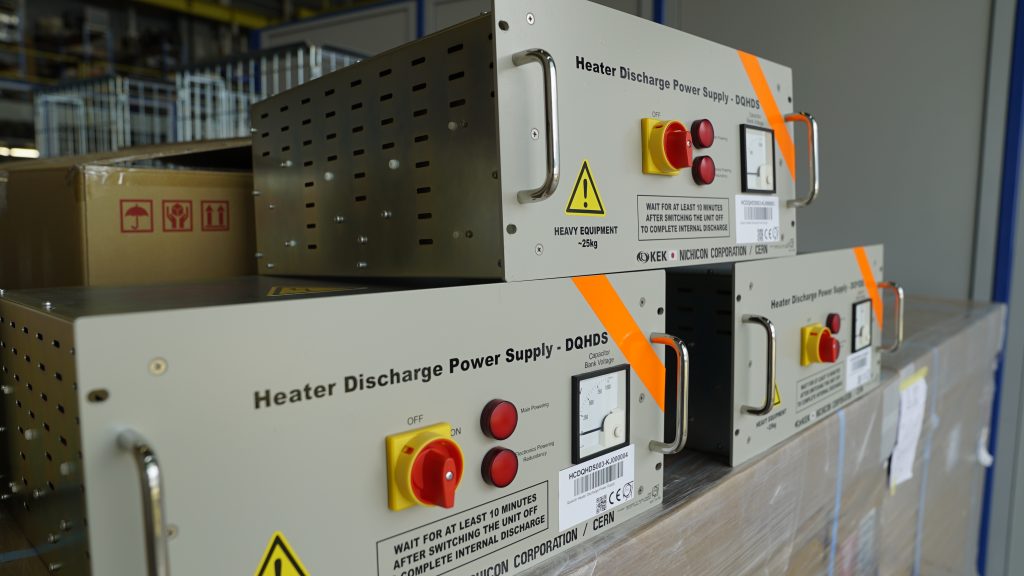
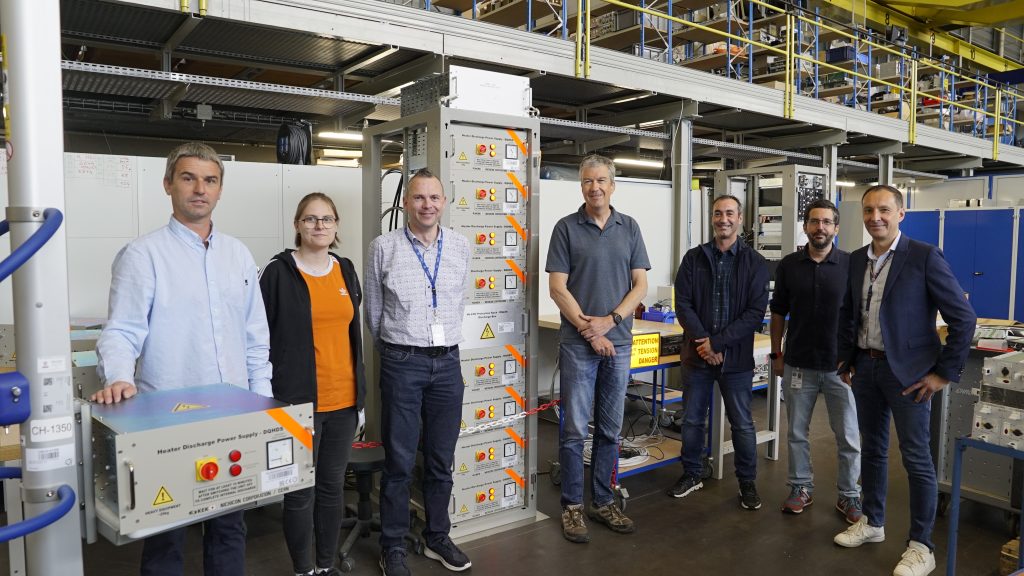
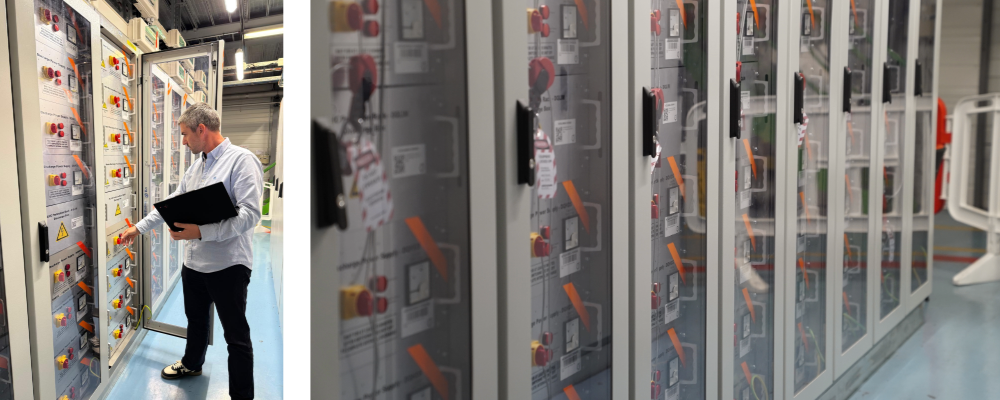
As part of Japan’s in-kind contribution to the HiLumi LHC Project, KEK continues to deliver the DQHDS units to CERN and to follow the production and delivery schedule closely, while CERN performs the reception, SAT, and integration activities. All 630 foreseen DQHDS units have successfully completed Factory Acceptance Tests (FAT) in Japan, and over half (388) are already at CERN and successfully completed their Site Acceptance Tests (SAT). After completion of the SAT, the accepted units are transferred to the CERN Flex building, where they are stored until their installation in the LHC tunnel during Long Shutdown 3 (LS3).
The number of units received already fully covers the needs for the novel HiLumi LHC inner triplet magnet protection systems. The remaining batches will complete the deliveries to CERN and will allow completing the consolidation of the protection systems for the IPQs and IPDs. Due to changes in air freight costs linked to increased fuel prices, the delivery schedule for the remaining units is being adjusted, with the final shipment now expected in autumn.
The DQHDS units are a key element of the HiLumi LHC magnet protection system. In the case of a quench, they discharge high currents into the quench heater strips of superconducting magnets, ensuring a uniform distribution of the stored energy in the entire volume to protect the magnet coils. In the HiLumi LHC inner triplets, they will operate together with the Coupling Loss Induced Quench (CLIQ) system and the Quench Detection System, forming a robust protection scheme.
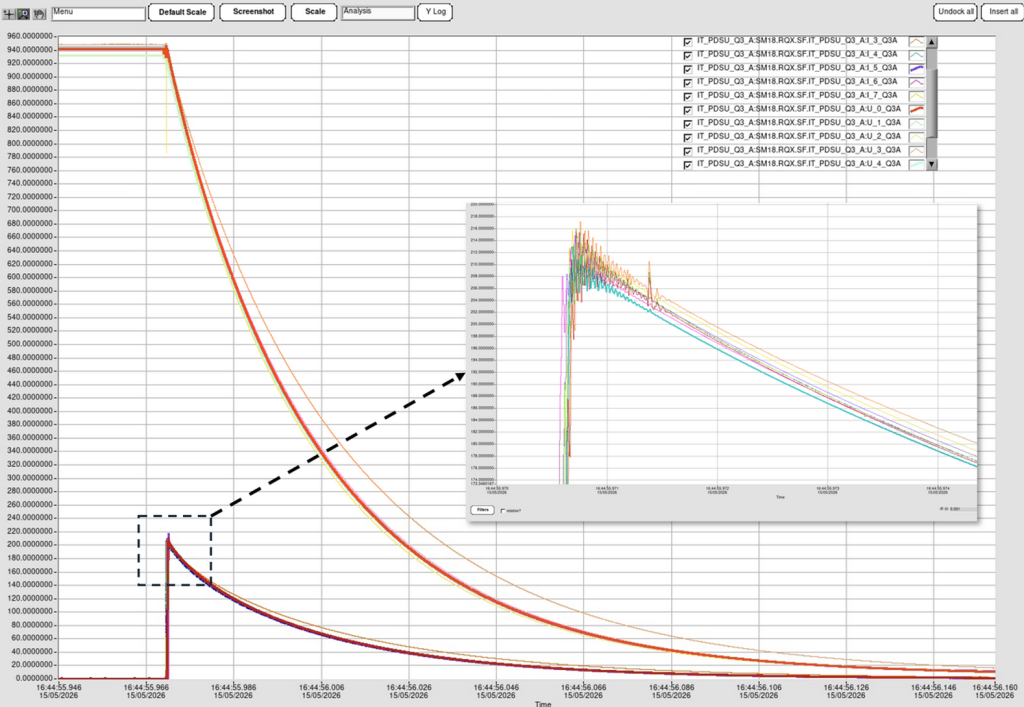
Recent activities at the IT String have included discharges on magnets of the inner triplet and combination/recombination dipole (D1) circuits, both protected by DQHDS, with the inner triplet circuit also protected by CLIQ. These tests are an important step in demonstrating the correct integration of the DQHDS units within the overall machine protection infrastructure.
The progress achieved in the production, acceptance and integration of the new DQHDS units reflects the close collaboration between KEK and CERN, and offers confidence in the readiness of the protection system for HiLumi LHC operation.