IT String: from leak non-conformity observation to first commissioning phase
The IT String is in its operational phase, with many lessons already learnt during the tests so far. The path to this phase – including detection and resolution of a non-conformity, and cooldown – has provided valuable insights and fostered strong collaboration across teams.
Leak non-conformity: detection to resolution
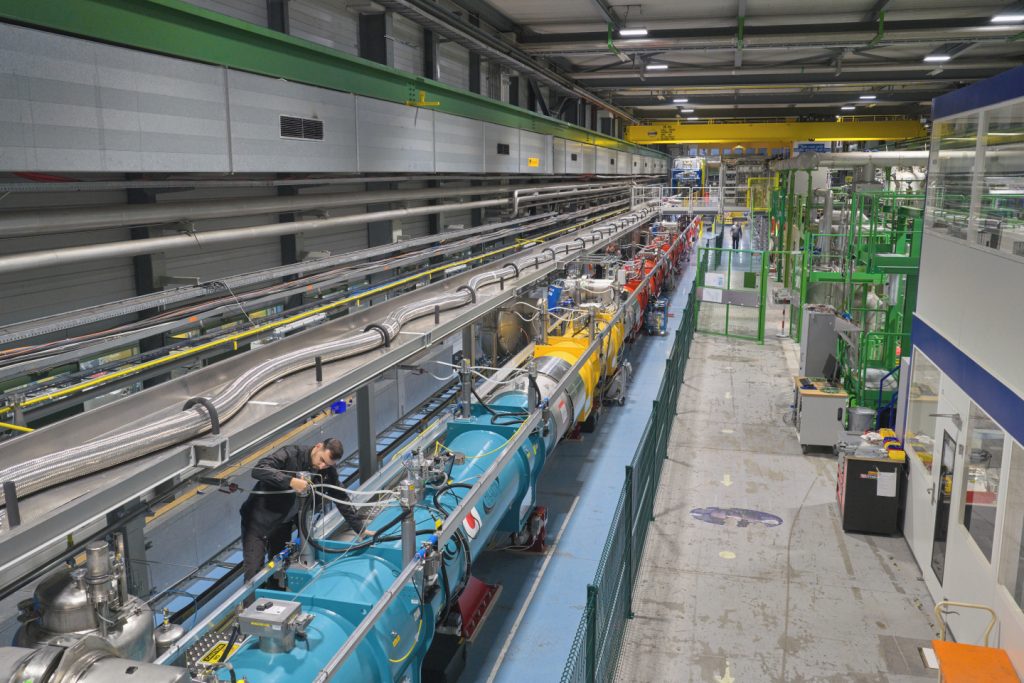
Following the successful completion of most quality control tests, including local leak detection, X-rays, electrical integrity and continuity checks in June 2025, the final global leak test before cool-down revealed a leak between the helium and insulation vacuum volumes. The localisation of the non-conformity, its repair, and the identification of the root cause became our main focus during the summer period.
Thanks to excellent teamwork, continuous follow-up, and systematic diagnostics, the design and installation process of the superconducting busbar system that connects the cold powering to the magnets were identified as the root cause of the leak. By the IT String Days in September 2025, the diagnostic campaign had been completed and the repair strategy presented and approved by the CERN and HiLumi LHC project management.
The Work Package 3 team, responsible for the interaction region magnets, developed an updated busbar design for both the IT String and the future HiLumi LHC machine, targeting easier installation and improved maintainability in case of repair or magnet exchange. The revised schedule of the IT String indicated a delay of approximately 5.5 months to complete the investigations and the definition and validation of the repair strategy, after which the intervention campaign started.
To minimise risks during dismantling, the IT String repair was implemented as a hybrid solution, combining elements of both the previous and updated baseline designs. All components required for the repair were delivered by October 2025, and the intervention progressed with remarkable efficiency from the concerned teams. The final busbar interconnections were completed before the end of the year and successfully qualified through a repeated full set of quality control tests.
Cooldown
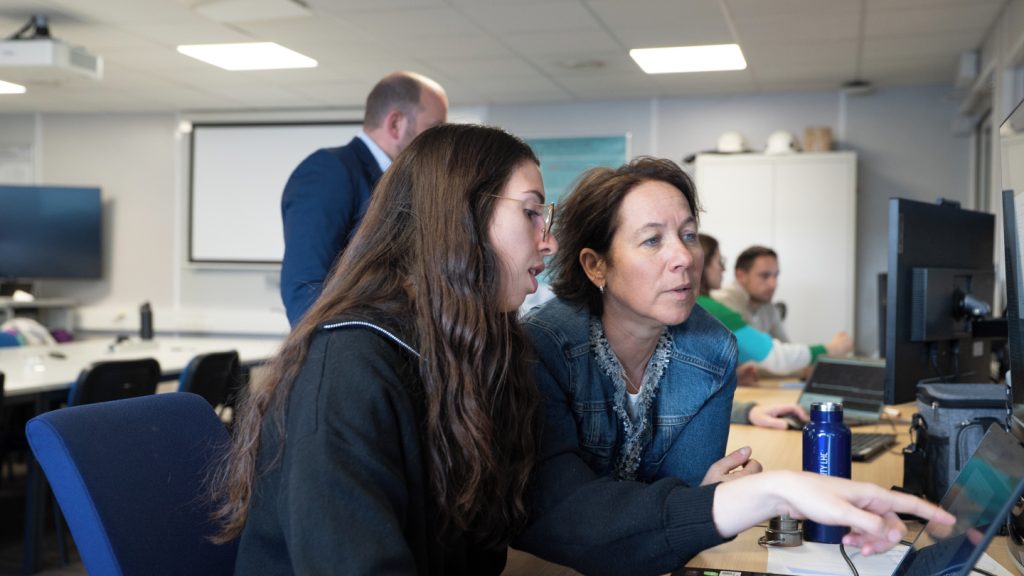
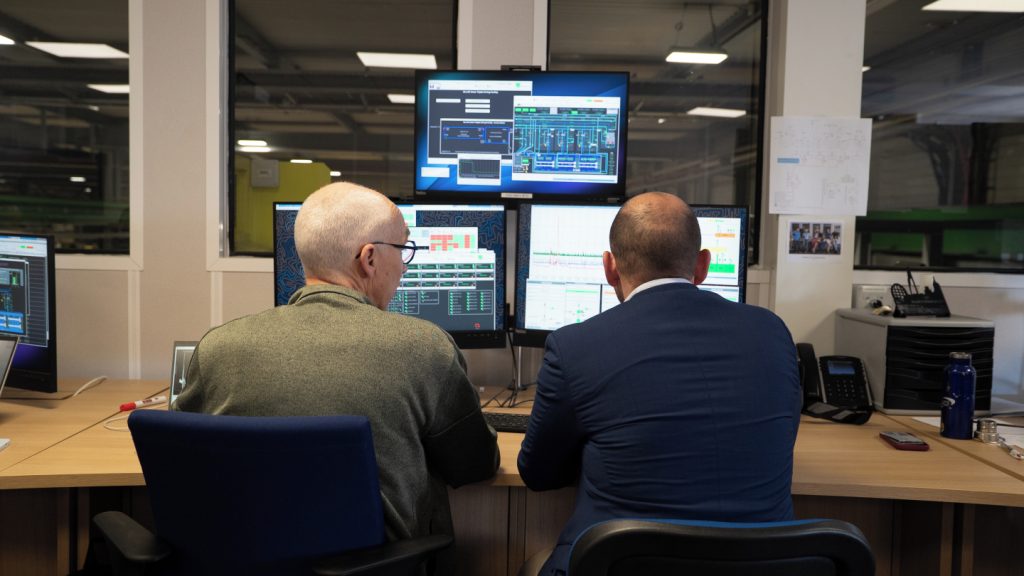
The next major milestone was obtaining the cooldown permit from the cryogenics group at CERN and the completion of the IT String Safety Clearance, strictly following the required safety actions and studies verified by the relevant bodies and experts at CERN. Cooldown of the IT String started on the 23rd February 2026 and progressed smoothly to 80 K within one week.
Electrical tests were performed at an average magnet temperature of around 70 K and finally at nominal operating temperature (1.9 K for the magnets). These tests revealed a few minor non-conformities and one more significant issue: a short to ground affecting one corrector circuit powering the MCBXFA magnet in the corrector package. As this issue does not prevent execution of the vast majority of the program, the affected circuit was isolated and operations continued.
The cryogenics teams then carried out extensive operational validation activities, including simulations of fault scenarios, recovery exercises, and tests of intervention readiness. Operational procedures and safety instructions were progressively implemented and adapted according to the pressure build-up in the cryogenic system and the associated risks.
The powering phase so far
The powering phase – a vital part of the hardware commissioning of the superconducting circuits – then started with the qualification of the high-order corrector circuits, followed by the dipole correctors. At the time of writing, these systems are being prepared for tests up to nominal current. Recent work has focused on the more complex circuits; the inner triplet quadrupoles and the separation/recombination dipole magnets, as well as the cold powering system.
Therefore, subsequential efforts are put in place and all teams are mobilised to analyse the systems and the circuit response during the progressive commissioning. The protection system behaviour during quench-trigger scenarios is being systematically verified to allow the next phase of powering at high energy.
Beyond technical achievements
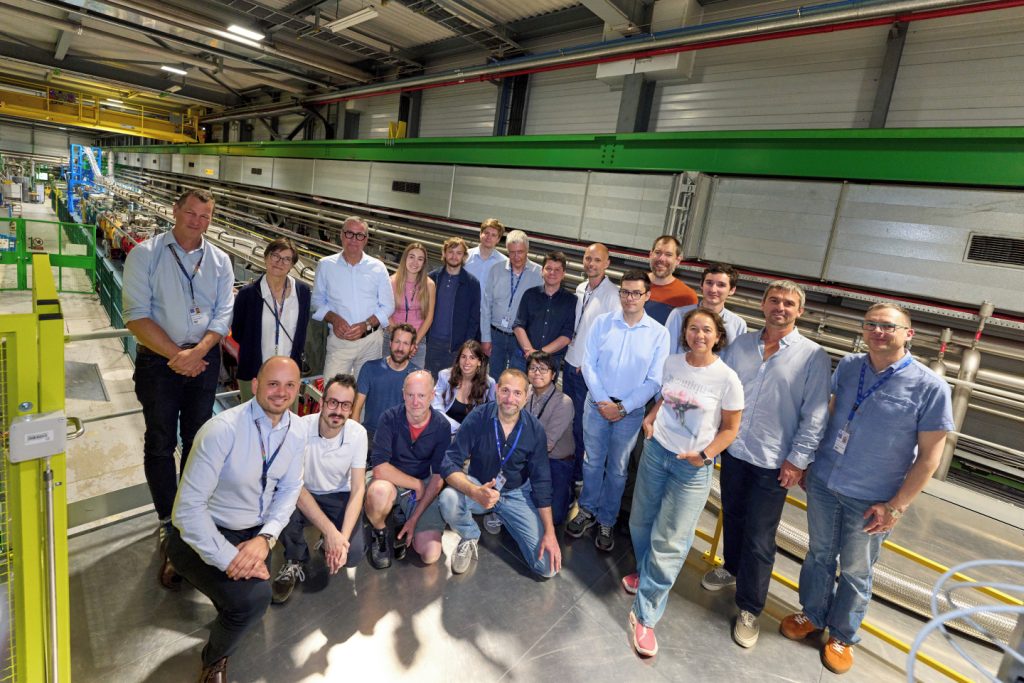
Beyond the technical achievements of the past nine months, this period has also been essential in strengthening the collaboration between teams. The close interaction developed during diagnostics, repairs, and hardware commissioning has created a strong operational environment and a shared understanding across systems and domains.
The journey ahead
The next key milestone will be the powering of the IT quadrupoles to nominal current while monitoring and interpreting the large quantity of signals generated by the system through dedicated analysis tools developed specifically for this purpose. These tools are another major asset spawning from the preparation work in the IT String, in preparation for their use during the commissioning of the magnet circuits in the LHC tunnel.
Exciting challenges still lie ahead, but the teams remain confident that, in the coming months, the IT String programme will allow a deep understanding and full qualification of the collective behaviour of the HiLumi LHC magnet circuits, powering and protection systems, and the behavior of the cryogenic systems during high-energy quenches.