HiLumi LHC magnet programme transitioning from fabrication to integration
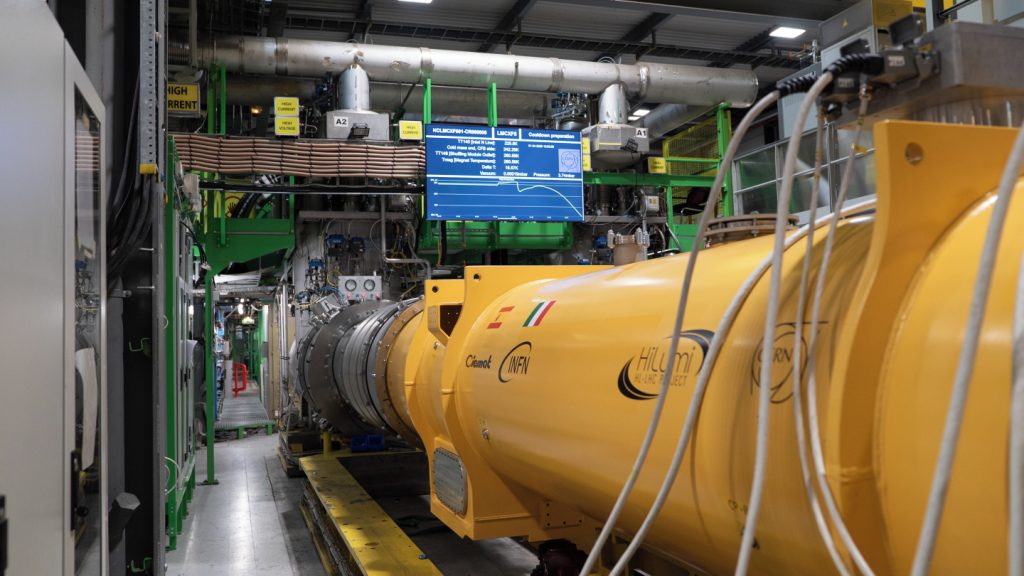
The High-Luminosity (HiLumi) LHC magnet programme continues to advance steadily across all collaborations, with major milestones reached in production, testing, and system integration. A significant highlight of the past 6 months is the cooldown of the Inner Triplet (IT) String, now at 1.9 K, with the first magnets already powered, marking an important step towards full operational validation and readiness. At the same time, magnet production is approaching completion across several fronts, signalling a transition from fabrication to final validation and integration.
Inner triplet magnets
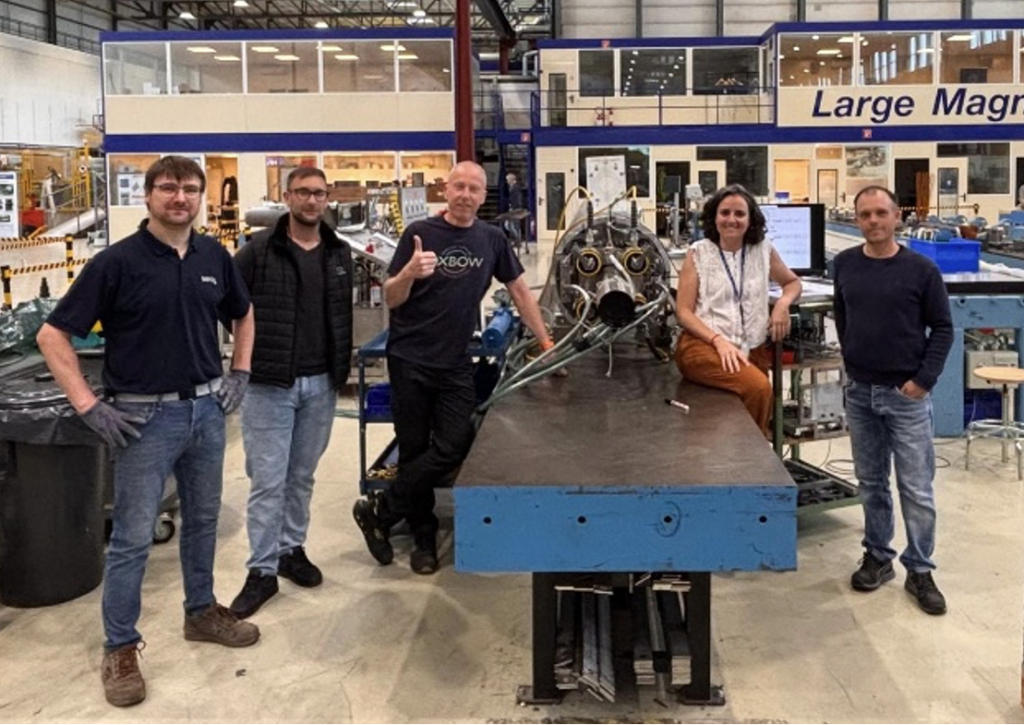
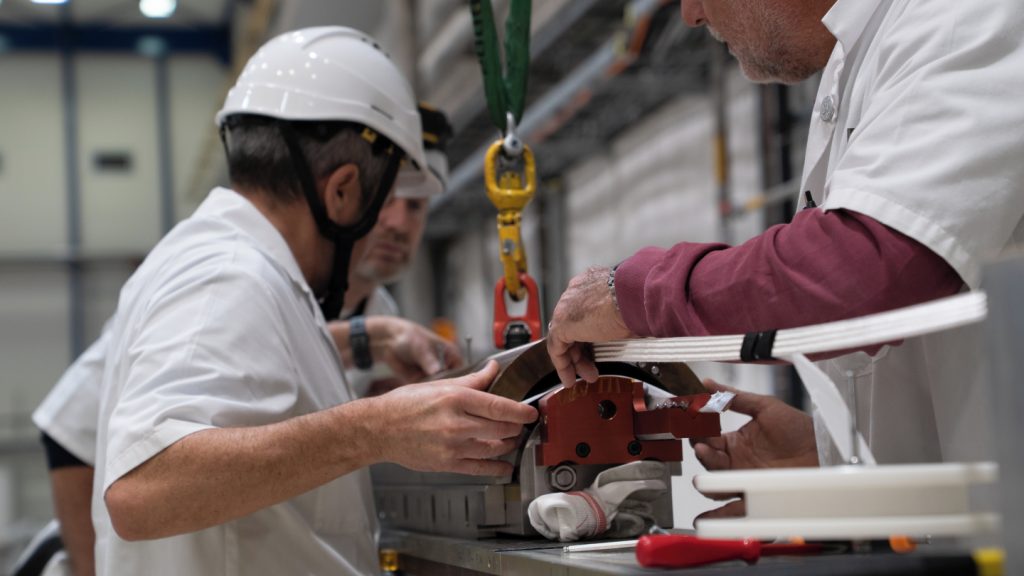
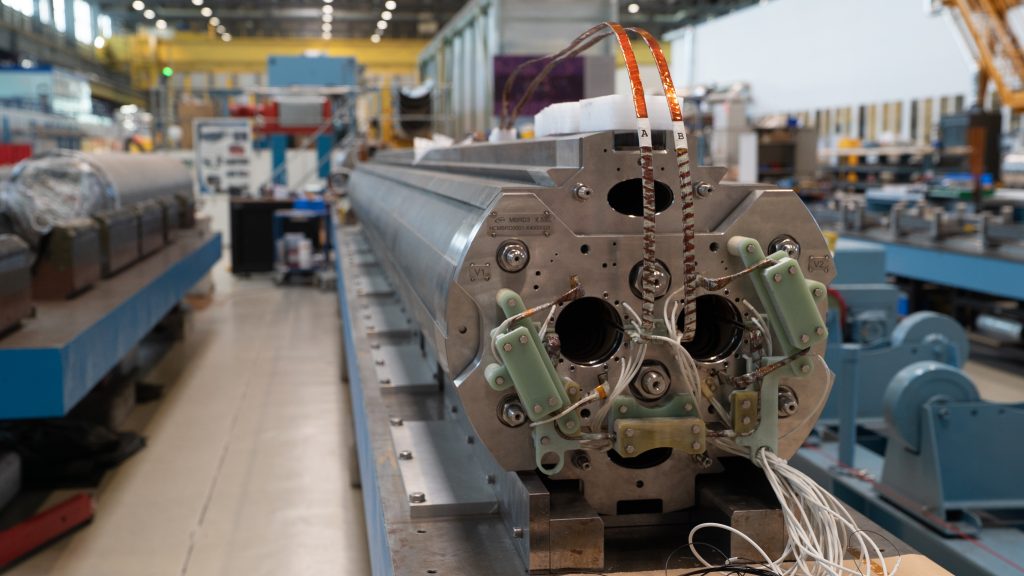
For the Q2 triplet magnets built at CERN, production has been completed, including cable fabrication, coil production, and magnet assembly for all eight units required for installation, as well as two spares. Cold mass and cryo-assembly fabrication and qualification is also well advanced, with seven out of eight units for installation in the LHC fully qualified during horizontal testing.
Within the US-AUP collaboration (Q1 and Q3 triplets), all magnets for installation have been qualified through vertical testing at Brookhaven National Laboratory. Coil fabrication and magnet assembly are now complete. Since the last newsletter, four additional cryo-assemblies (CA03–CA06) have been qualified – two at CERN and two at Fermilab – bringing the total to half of the required units for installation. Further progress continues, with CA07 completed and soon to be tested at CERN, CA08 currently being cryostated, and fabrication of the final two cold masses ongoing.
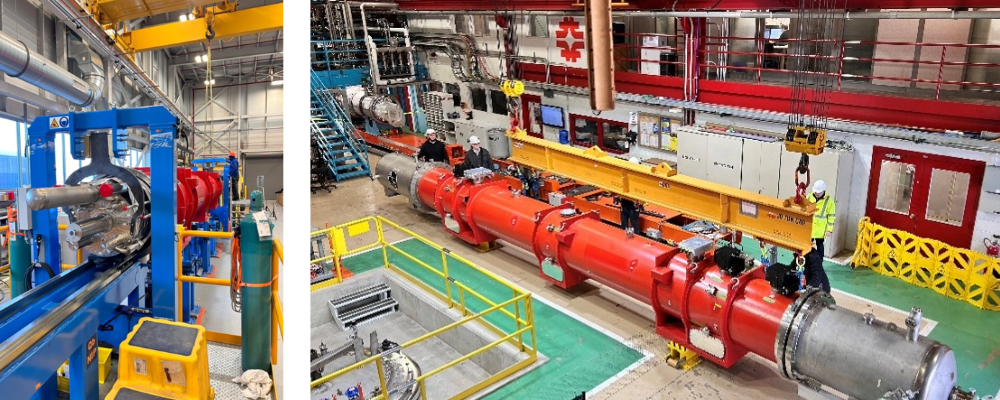
Figure 2. AUP CA06 being installed in the FNAL test facility (left) and CA07 cold mass insertion. Giorgio Apollinari / FNAL
Corrector magnets
Significant progress has also been achieved in corrector magnet production.
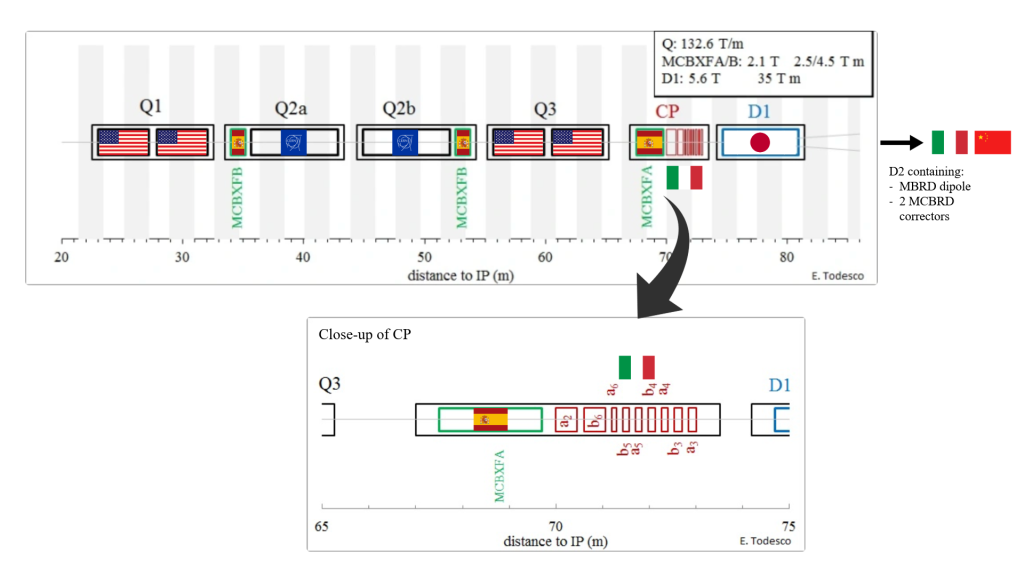
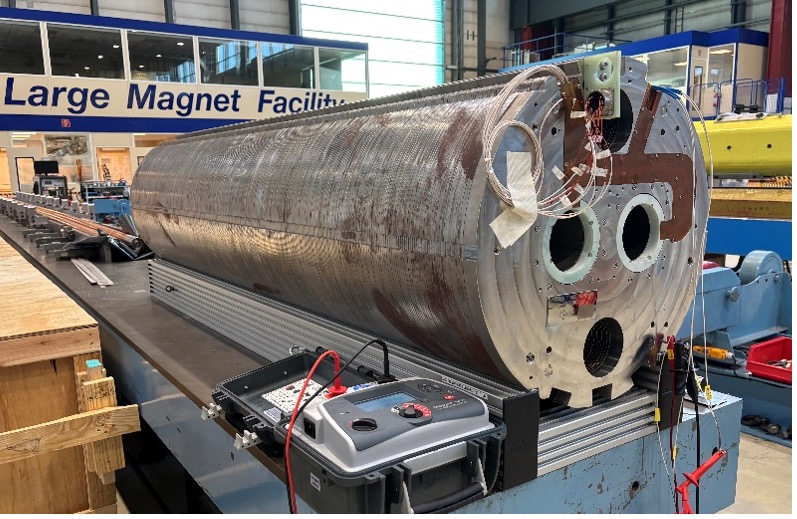
For the nested orbit correctors (CIEMAT collaboration), two additional MCBXFA magnets (A3 and A4) have been completed, meaning all destined for tunnel installation are now available. MCBXFA magnets are coupled together in the Corrector Package cold mass at CERN with the super-ferric high order corrector magnets produced by INFN-Milan collaboration. Only the spare unit (A5), which is not planned for cold mass assembly, remains to be produced. Coil fabrication at CIEMAT is nearing completion, with assembly of MCBXFA5 foreseen at CERN during the summer. For the series production of the shorter MCBXFB version, the completion of units 08, 09, and 10 means that all magnets – including spares – have now been fully qualified. The programme remains on track for completion by summer 2026.
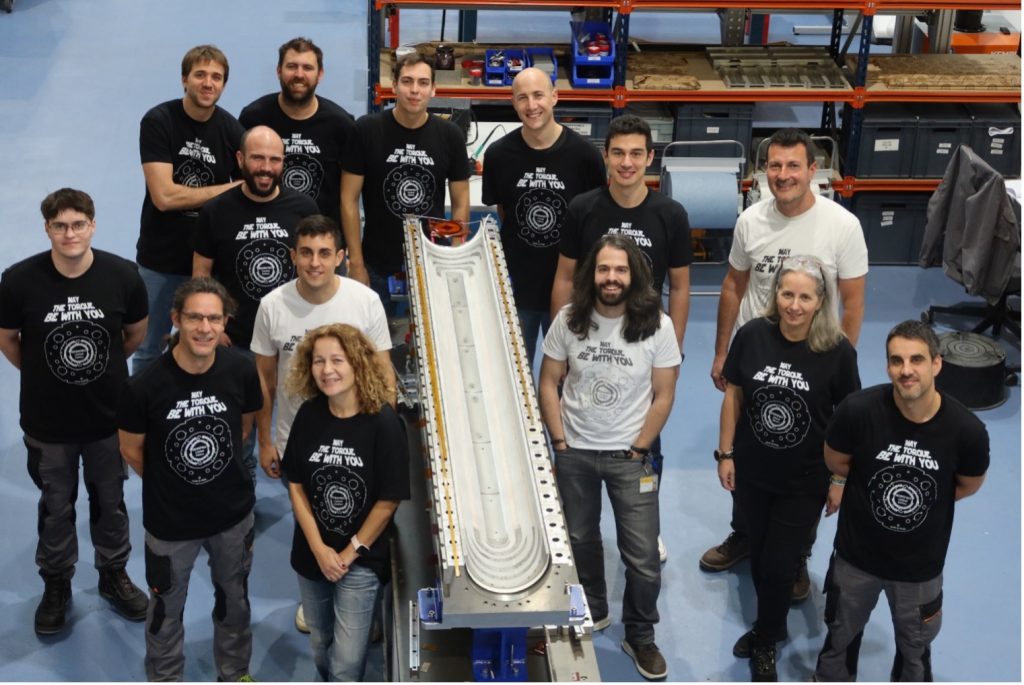
For the D2 correctors (IHEP collaboration), production is now complete. The final three units (MCBRD08–10) have been delivered to CERN from China, with MCBRD08 already successfully qualified at CERN and the remaining units to be tested shortly. In addition, MCBRD11 has been completed and tested at CERN.
Separation and recombination dipoles
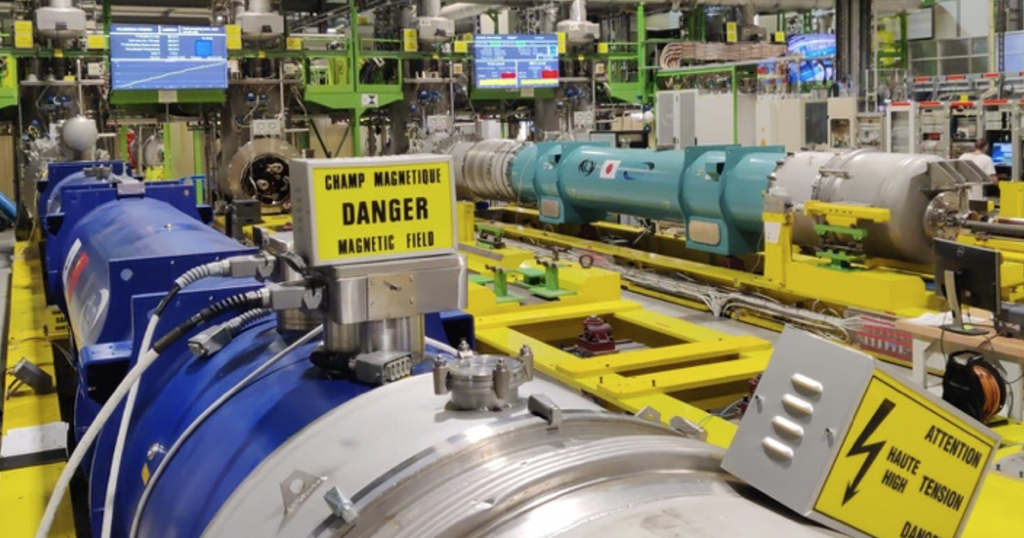
Steady progress has also been achieved for D1 separation/re-combination dipoles (KEK collaboration). One additional magnet (MBXF4) has been qualified vertically at KEK, bringing the total to five out of six units (including spares) since the last newsletter. The two first series cold masses have been successfully tested at CERN, the third is being prepared for testing. Production of the last magnet is ongoing at Hitachi, where the remaining cold masses will be completed.
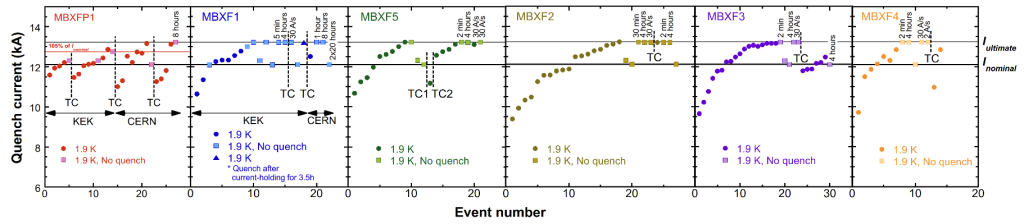
For the D2 separation/recombination dipoles (INFN Genova collaboration), the first two units (MBRD1 and MBRD2) have demonstrated excellent performance during horizontal cold testing, reaching ultimate current without quenching. Testing of the third unit for installation (MBRD4) is ongoing. Production at ASG continues, although some challenges requiring iterative improvements of the electrical insulation system have been encountered. Of the three remaining magnets, two are expected to be delivered to CERN before the end of the year.
Looking Ahead
With production activities nearing completion and testing campaigns progressing well the focus is increasingly shifting towards final validation and integration. The successful cooldown and initial powering of the IT String represent a major milestone in this transition.
In parallel, the construction of the DCM and DQM connection modules (like the magnets, under the responsibility of HiLumi LHC Work Package 3), continues steadily, supporting the forthcoming integration phases. In addition, the HiLumi LHC busbar system has been redesigned following a critical non-conformity identified during the IT String installation. The updated design introduces a more robust and modular installation concept, based on smaller cables and surface pre-assembly, reducing mechanical stress during installation while maintaining performance requirements.
Overall, the success of the HiLumi LHC magnet programme, in terms of enabling technologies, quality, schedule and final cost testifies to the huge value of collaboration between CERN and its international partners.