Crab cavity and RF developments across collaborations
Strides are being taken for the RFD and DQW crab cavities and cryomodules, with challenges being tackled and overcome across the collaborations, and more deliveries to CERN imminent. Important progress has also been made for the high-power RF components.
RF Dipole Cryomodule for SPS Tests (CERN)
The Radio Frequency Dipole (RFD) cryomodule in the SPS was approved for additional Machine Developments (MDs) in the 2026 run with a focus on impedance studies. The cryomodule was cooled down mid-February and immediately subjected to beam scrubbing with high intensity beams and RF conditioning. To date, three MD slots could be done, two of which were dedicated to studying impedance effects from the fundamental mode at 270 GeV and one MD on losses with crabbed beam and collimator gaps at 26 GeV. The remaining MDs in July will continue to probe the impedance effects at 270 Gev and additional studies related to RF noise and RF multipoles, which will conclude the SPS programme as the accelerator complex enters Long Shutdown 3.
DQW series cavities (CERN, Research Instruments)
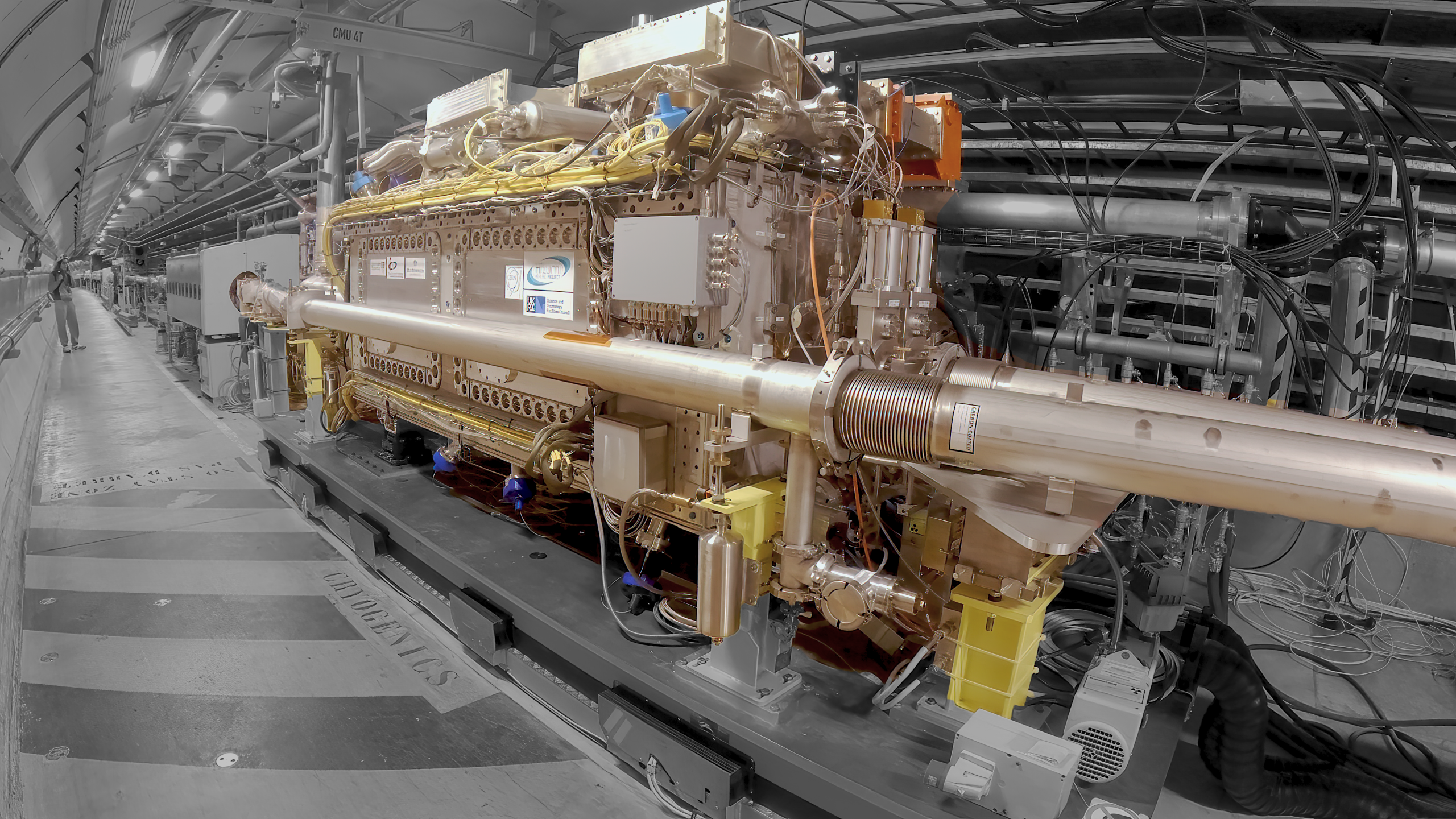
Four series Double Quarter Wave (DQW) dressed cavities – two fabricated at CERN and two at Research Instruments (RI) – were successfully qualified in 2024-25 and are being integrated into the first two cryomodules by UK-STFC.
The final set of six series DQW bare cavities manufactured at RI arrived at CERN during the first two quarters of 2025. One cavity directly met the specification requirements, while the remaining cavities required additional surface treatment at CERN by the TE-VSC group to achieve the target performance. Following these treatments and successful qualification, the cavities were sent back to RI for helium tank installation.
Five out of the six jacketed cavities have now returned to CERN and are currently undergoing testing in SM18. Four cavities have been qualified, one is scheduled for testing in the coming weeks, and the last cavity is in the final stages of welding at RI. After qualification of the jacketed cavities, a final test at 2 K all ancillaries (HOMs) will be performed before the cavities are assembled into a cryomodule at UK-STFC and CERN. One dressed cavity is currently under testing in CERN’s SM18 test hall, and the remaining cavities will follow progressively.
DQW cryomodules status – UK Collaboration and CERN
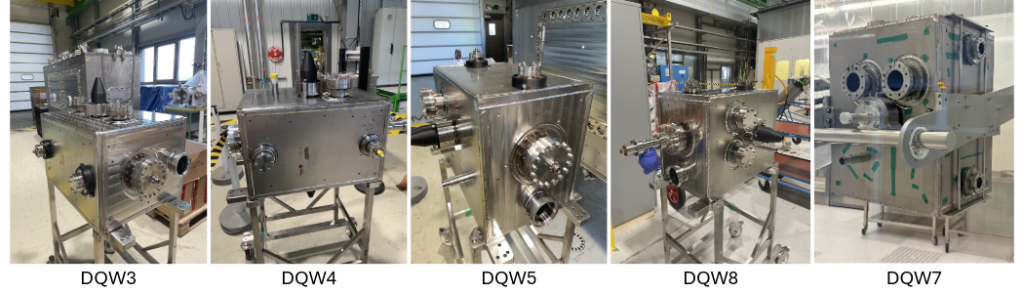
The UK crab cavity collaboration at Daresbury Laboratory completed the assembly of the first Double Quarter Wave (DQW) cryomodule for the High-Luminosity LHC in February 2026. During the outgoing testing, a leak was discovered on a cryogenic line, and an investigation and repair plan was launched with extensive trials and qualifications. The repair was performed in late-April 2026, through the cryomodule doors, in collaboration with weld and materials experts from CERN. Following the repair acceptance in May, the team are performing final outgoing tests with transportation scheduled for mid-June.
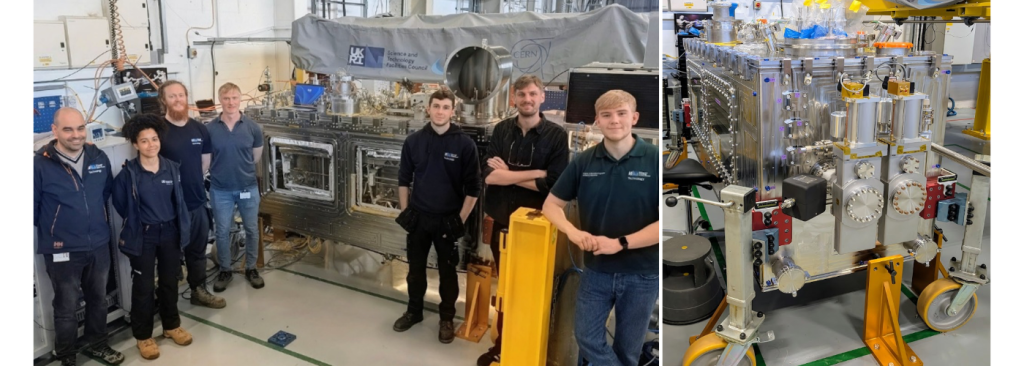
In parallel, the UK team have completed the beamline assembly and qualification of their second DQW-LHC cryomodule, with two cavities supplied by CERN and Research Instruments GmbH. The power coupler integration is ongoing with cleanroom activities expected to be completed in June’26, allowing to be ready for the next phase of integrating the bi-phase cryogenic line in July.
RFD series in-kind from US-AUP and CERN production (US-AUP, Zanon, CERN)
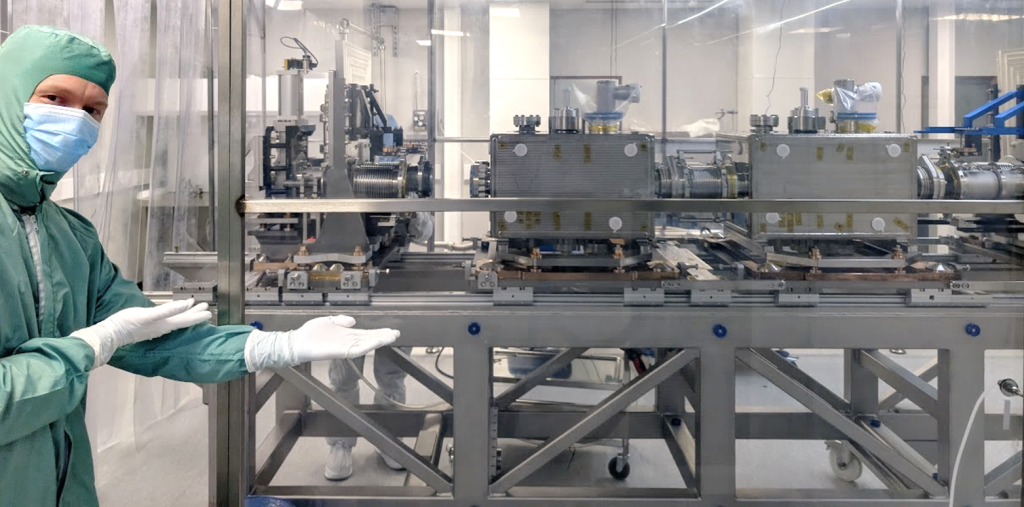
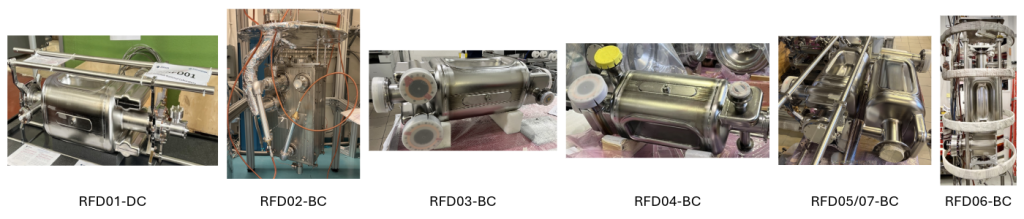
In 2026, fabrication of the series RFD crab cavities at Zanon resumed following a temporary production pause focused on strengthening documentation and quality assurance. Significant progress has since been achieved: eight bare cavities have now been completed and are undergoing testing at Jefferson Lab and Fermilab, with four already fully qualified. Two cavities have also been successfully integrated with their helium vessels and magnetic shields. The first fully dressed cavity was qualified at Jefferson Lab with all higher-order mode (HOM) dampers installed, delivered to TRIUMF, and successfully re-qualified earlier this year.
Additional recovery efforts were carried out on cavities NRFD01 and NRFD03, which initially showed limited performance. Both cavities were shipped to CERN for light chemical reprocessing and further cold testing. Testing at CERN was limited by hard multipacting barriers, however subsequent testing at Jefferson Lab successfully processed through the barriers, allowing NRFD01 to achieve qualification criteria in bare state in May 2026.
During production, non-conformities were identified on selected flanges of bare cavities NRFD03, NRFD05, and NRFD07. AUP and Zanon are actively implementing mitigation measures while continuing production, testing, and qualification activities.
RFD series cryomodules at TRIUMF (Canada)
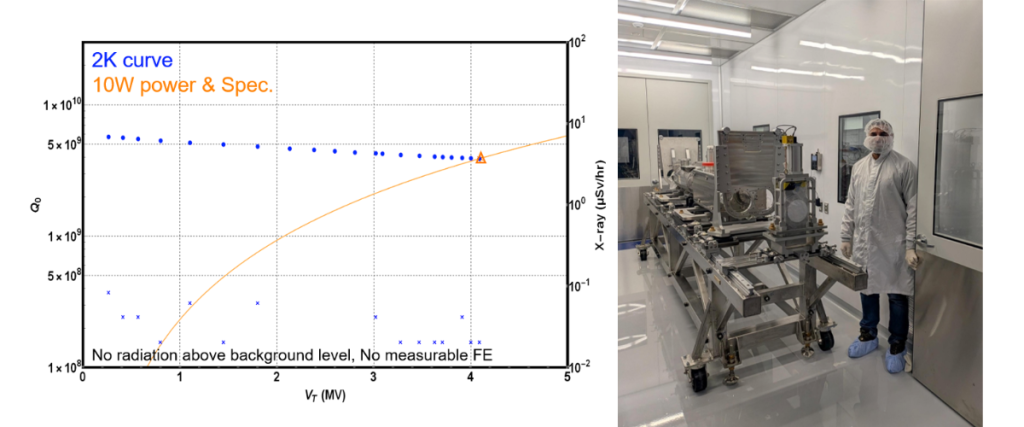
The first production cavity has been received at TRIUMF from AUP. The cavity has been qualified in terms of warm and cold RF performance. A small vacuum leak in a HOM coupler feedthrough is being assessed through a repeated cold cycle. The second production cavity is due for arrival at TRIUMF in the latter half of July. A positive requalification of this cavity marks the critical path of the first RFD series cryomodule assembly, TCM1. In the meantime, TRIUMF staff are using a prototype cryomodule TCM0 to practice assembly steps and help qualify assembly procedures. Inventory lists and fixtures are being prepared. A first batch of parts for a CERN-assembled cryomodule using TRIUMF-sourced parts, TCM5, is prepared and awaiting shipping.
HPRF Status (CERN, Japan)
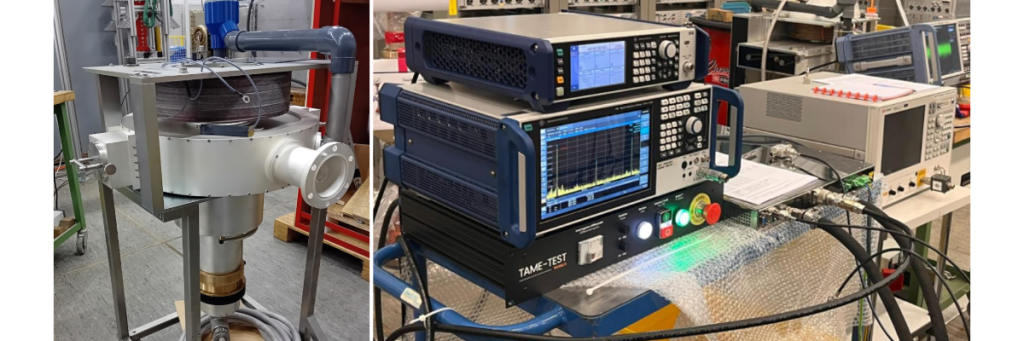
Very significant progress has been made over the last 6 months towards launching procurement of the high-power RF components, which is fully funded through an in-cash contribution of Japan to the HL-LHC project.
The first prototype of the upgraded single cavity IOT trolley from Thales for the series has been received and tested to nominal power at CERN, and all the IOT tubes have been delivered.
Detailed site acceptance tests of the first prototype of the solid-state driver from Italtec revealed some improvements necessary for the series IOTs which have been communicated to the vendor.
The improvements are now being applied before the delivery of the first 15 kW unit is expected in July 2026. Detailed discussions between the CERN technical team and the vendors for the high-power transmitters (Ampegon) and Circulators (Microwave-Tech) have concluded, and the first series units are expected towards the end of the year. Finally, the first two series high-power RF loads have been received from Spinner and the rest of the series are to follow in 2026-27.