
Tag: WP3 IR Magnets
-
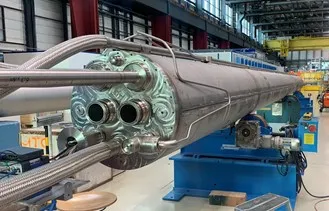
WP3 contribution – Issue 6
The magnet program has reached several milestones since the last annual meeting: in the following we summarize the main achievements of our collaborations. The AUP progress on the MQXFA magnets is covered in a dedicated article (link). INFN collaboration and the D2 and corrector package cold masses The production of the 54 high order corrector…
-
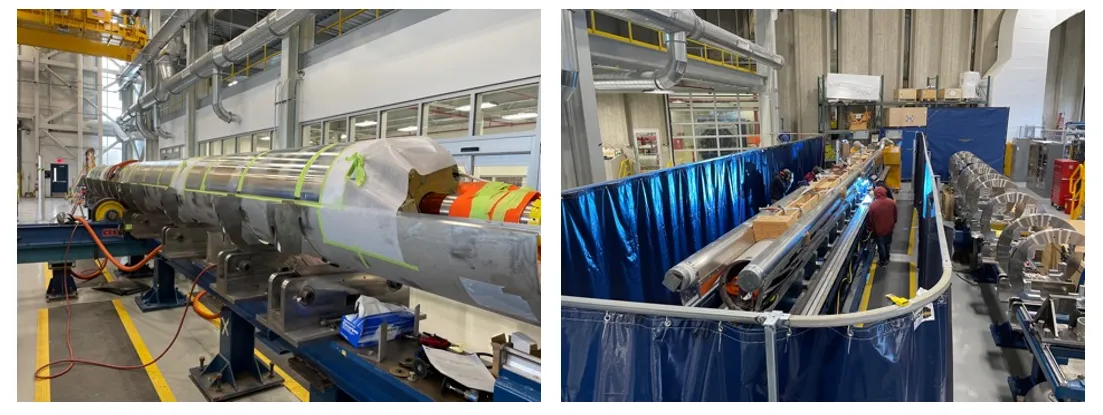
Advancements in MQXFA program and endurance test
In May 2022, the HL-LHC AUP project successfully completed an endurance test on an individual magnet (MQXFA05) in vertical position. This step, foreseen for the final cold mass assembly in horizontal position, was anticipated to this intermediate assembly stage to gather more information on the long term behavior of Nb3Sn magnets. The test involved completing…
-
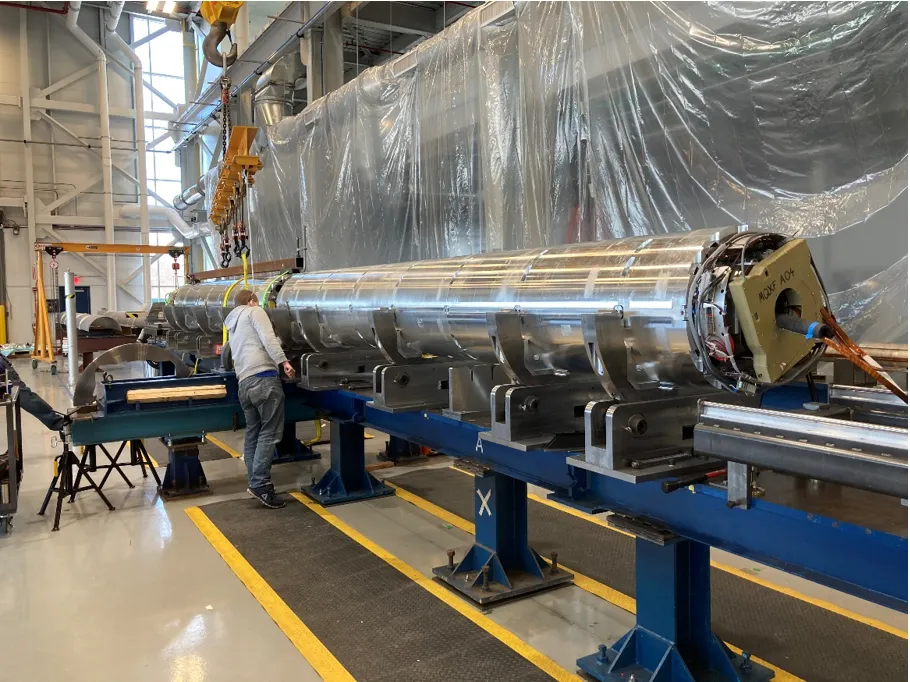
Status of MQXF production and test results
Nb3Sn triplet (MQXF) After the successful tests of MQXFA03 and MQXFA04, that allowed last year to obtain the approval of the US contribution by the DOE, MQXFA05 has been tested in May 2021. The magnet (in a vertical dewar and without outer stainless-steel shell, as MQXFA03 and MQXFA04) reached the required performance, confirming the absence…
-
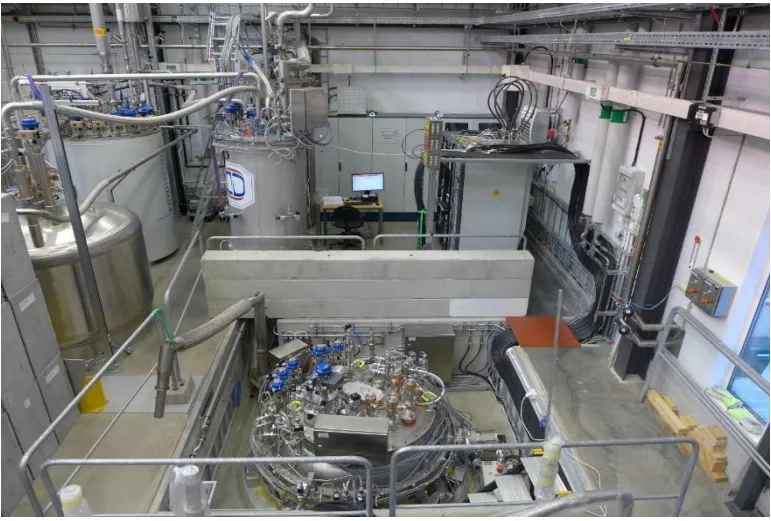
Qualifying Magnets and Cavities at FREIA
Uppsala University in Sweden has been a valuable collaborator since the foundation of CERN. In the 1950’s, Uppsala, having just constructed its own cyclotron, contributed to the development of the very first accelerator at CERN: the synchrocyclotron. In the 1980’s CERN assisted Uppsala with the construction of a proton and heavy-ion accelerator and cooler-storage ring…
-
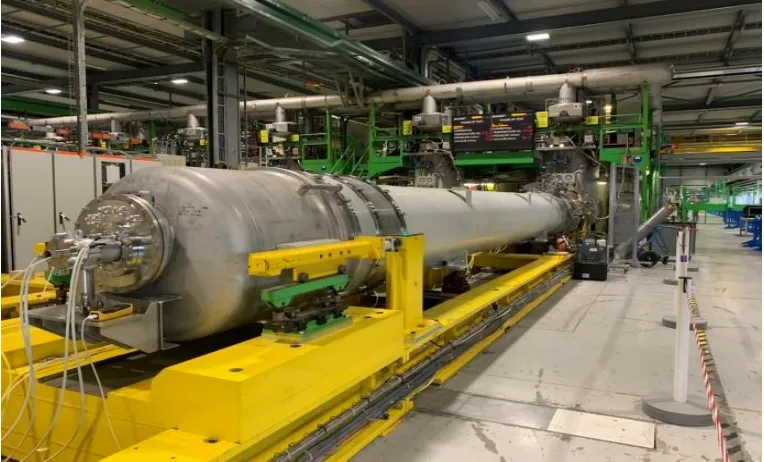
Status of Magnet Production and Test Results
Nb3Sn triplet (MQXF) The most significant advancement has been the test of the third US-AUP full size magnet, named MQXFA03. The magnet reached nominal gradient with limited training and is the first magnet ready to be included in the first cold mass to be installed in the IT-String test. The test was particularly significant since…
-
D1 and D2 and HO corrector review
In December 2018, a review of the design of the D2 correctors and HO correctors took place in CERN. The committee supported the selected designs that showed to reach the required performance. For the D2 correctors, based on the CCT concept that is being used at CERN for the first time, a special effort on…
-
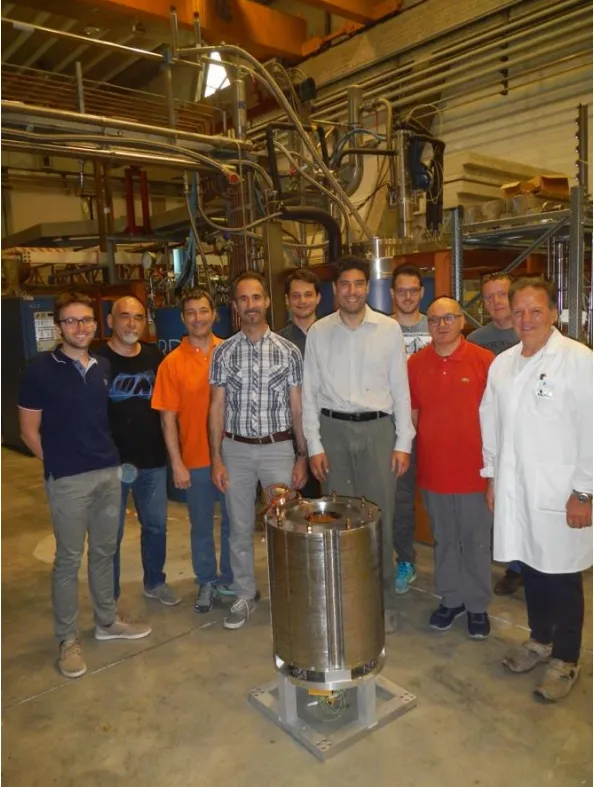
Status of magnet test results
The last short model of the Nb3Sn quadrupole was limited below nominal current by one coil: to overcome this issue, the limiting coil shall be replaced magnet and the magnet shall be tested in summer. The results of the test on US prototype has been reported here. The first prototype of the nested corrector MCBXFB…
-
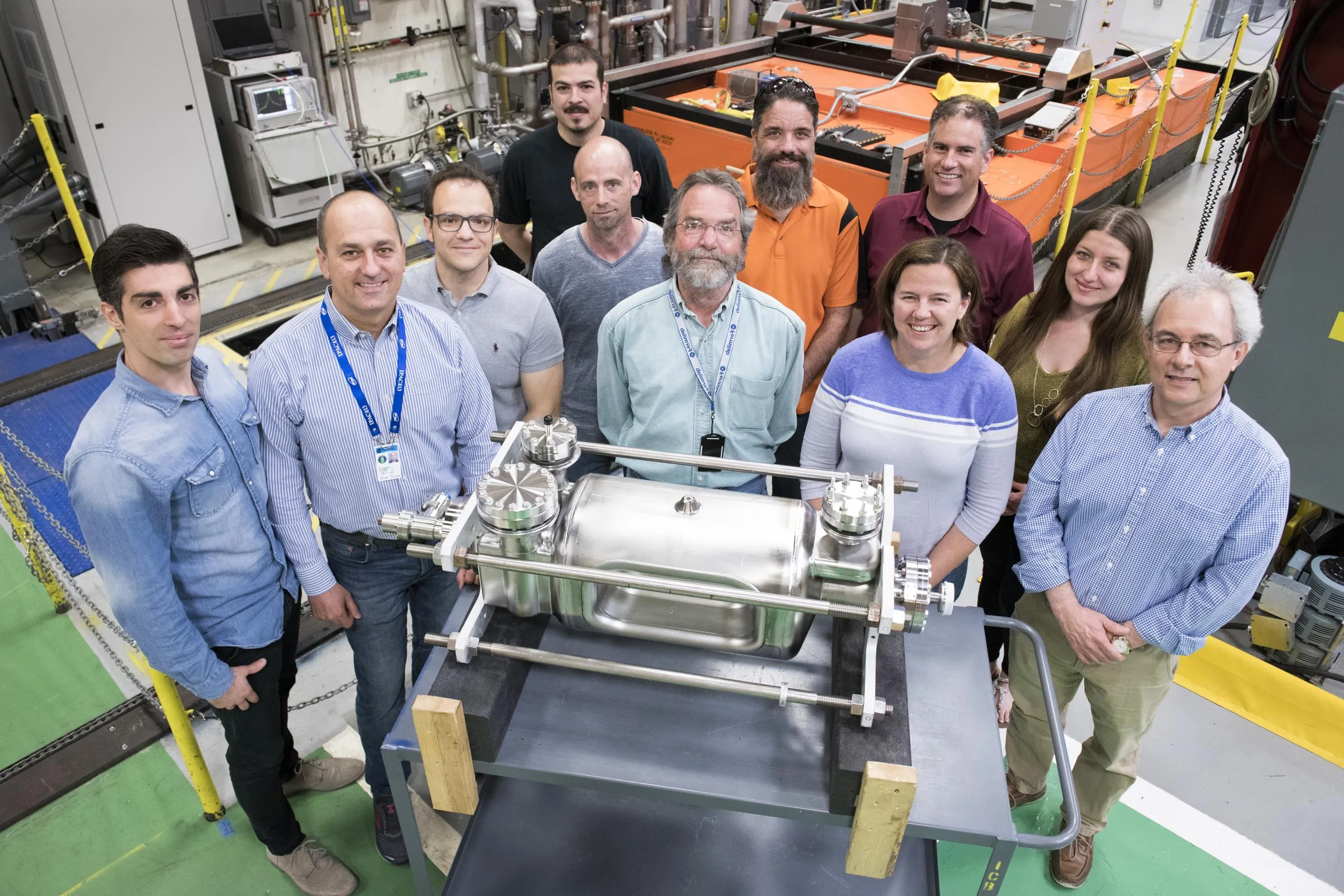
Report on the CD2 DOE Review
The US HL-LHC AUP effort successfully defended its plans to DOE in December 2018, and was baselined in February 2019. This major step, called Critical Decision -2 approval (CD-2), provides the funding agency approval of the total estimated Project cost and yearly funding profile to meet the goal of the US contribution to HL-LHC. Two…
-
Highlights from the HL-LHC Work Packages
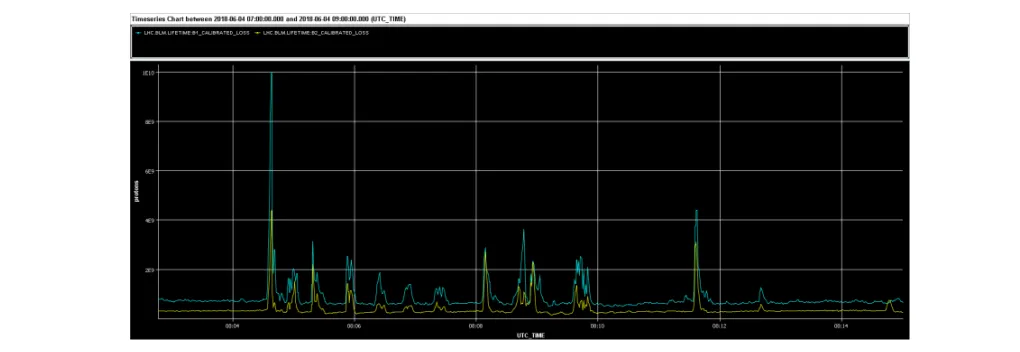
WP2: Performance and Beam Dynamics During a measurement campaign in 2017 at the LHC, it was clearly demonstrated for the first time the beam lifetime improvement due to a compensation of the beam-beam long range effects, using DC current baring wires. The measurements and design studies are continuing during 2018 for further refining of the…
-
Highlights from the HL-LHC Work Packages
WP2: Performance and Beam Dynamics Following the project re-baselining in summer 2016, the layout and optics of the high luminosity insertion regions were reviewed and the performance re-evaluated. This has led to a small but visible reduction in performance, reducing the margins available for the achievement of the nominal and ultimate luminosity targets. Optimization of…